
Contaminated Land Assessments
Phase I and Phase II Investigations Across the UK
Contaminated Land Assessments — Phase I and Phase II Investigations Across the UK
The development of brownfield land is central to the UK government’s planning strategy, and contaminated land assessment is central to the safe and compliant development of that land. Almost any site with a history of industrial, commercial, agricultural, or waste-related use has the potential to contain soil or groundwater contamination that poses risks to future occupants, construction workers, or the surrounding environment. Understanding those risks, quantifying them accurately, and demonstrating to the satisfaction of the local planning authority and the Environment Agency that the land is suitable for its intended use is a legal and commercial necessity for any developer bringing brownfield land forward for development.
Stansted Environmental Services Ltd is a specialist geo-environmental consultancy providing contaminated land assessment services from initial desk study through to remediation and validation across the United Kingdom. We work with residential developers, commercial developers, housing associations, local authorities, landowners, and their planning consultants and legal advisers to deliver contaminated land assessments that are technically robust, commercially practical, and accepted by planning authorities without qualification. As affiliates of the Association of Geotechnical and Geoenvironmental Specialists, we operate to the highest professional and technical standards in the field.
What Is a Contaminated Land Assessment and Why Is It Required?
A contaminated land assessment is a systematic investigation of a site to determine whether potentially harmful substances are present in the soil, groundwater, or ground gas, and whether those substances pose an unacceptable risk to human health, controlled waters, or the wider environment under the proposed end use of the site. It is required as a pre-commencement planning condition for the vast majority of development on brownfield land, and is also commonly required for greenfield development in areas where historical industrial activity may have affected the land, for development on agricultural land where pesticide or fertiliser contamination is possible, and for any development where a solicitor’s environmental search has identified a potential contamination risk.
Failing to commission a contaminated land assessment when one is required is not simply a compliance oversight, it can have catastrophic consequences for a development project. A developer who proceeds to purchase and develop a contaminated site without adequate investigation may find, after construction has begun, that the site is so contaminated that remediation costs make the project unviable. They may find themselves liable for remediation under Part IIA of the Environmental Protection Act 1990 regardless of how the contamination occurred. They may find that their building warranty provider or mortgage lender refuses cover until adequate investigation and remediation has been demonstrated. None of these outcomes is recoverable without significant cost, delay, and legal complexity.
Phase I Desk Study and Preliminary Risk Assessment
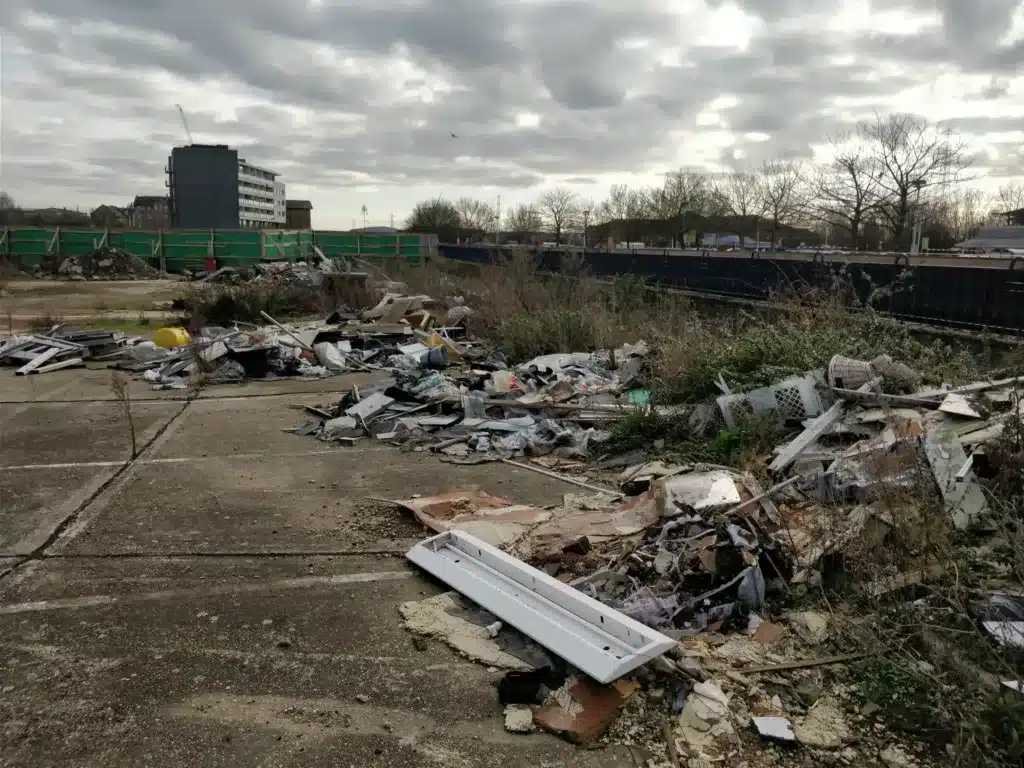
The Phase I Desk Study is the starting point for all contaminated land investigations. It involves a comprehensive review of the historical land use of the site and surrounding area using a wide range of data sources historical Ordnance Survey maps, aerial photography, planning and building control records, geological and hydrogeological data, British Geological Survey records, Environment Agency regulatory databases, historic trade directories, and any existing site investigation reports. The objective is to identify any past or present uses of the site or adjacent land that may have introduced contamination, and to assess the likelihood and potential significance of any contamination that may be present.
The outputs of the Phase I Desk Study are presented in a preliminary risk assessment report that includes a conceptual site model, a structured representation of the potential contamination sources, the pathways by which contaminants could migrate from those sources, and the human or environmental receptors that could be exposed. The preliminary risk assessment concludes whether significant pollutant linkages are plausible and whether a Phase II intrusive investigation is required to characterise the contamination further. For many planning applications, the Phase I report alone is sufficient to discharge the pre-commencement contaminated land condition where the assessment concludes that no significant contamination risk exists.
Contaminated Land Assessment Methods
01.
Phase I Desk Study
Historical land use review, regulatory database checks, geological data review, and preliminary risk assessment to identify potential contamination risks.
02.
Phase II Intrusive Site Investigation
Physical investigation using trial pits, boreholes, monitoring installations, soil sampling, groundwater sampling, ground gas sampling, and laboratory analysis.
03.
Ground Gas Assessment
Installation of gas monitoring wells and assessment of methane, carbon dioxide, and soil gas risks using recognised ground gas assessment methodology.
04.
Remediation and Validation
Preparation of remediation strategies, validation sampling, testing, and reporting to demonstrate that the site is suitable for its proposed end use.
How Much Does a Phase I Desk Study Cost?
A Phase I Desk Study for a straightforward brownfield site in England typically costs from around £800 to £1,500 plus VAT, depending on the size of the site, the complexity of the historical land use, and the detail of the database searches required. For larger or more complex sites with a longer industrial history, or for sites requiring detailed review of planning and building control archives, costs will be higher. SES can provide a fixed-price quotation for a Phase I assessment based on the site address, site area, and a brief description of the proposed development and any known site history. We can typically deliver Phase I reports within one week of instruction.
Phase II Intrusive Site Investigation
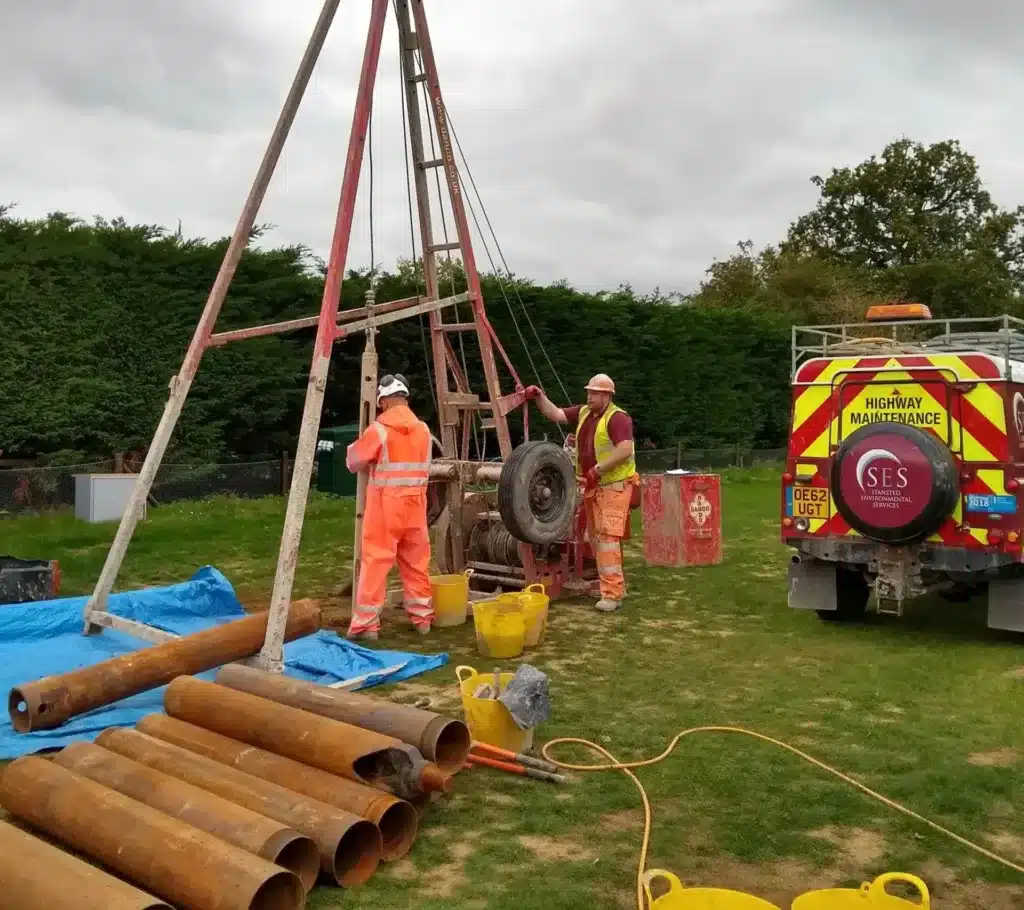
Where the Phase I assessment identifies a plausible risk of significant contamination, a Phase II intrusive site investigation is required to characterise the nature, extent, and concentration of any contamination present. This involves physical investigation works trial pits, boreholes, and monitoring installations to collect representative samples of soil, groundwater, and ground gas from the areas of the site identified as being at highest risk. The sampling locations and depths are determined by the conceptual site model developed during the Phase I assessment, with the objective of testing the plausibility of the identified pollutant linkages and quantifying any contamination that is present.
All sampling is carried out by experienced geo-environmental field staff using appropriate equipment and procedures, in accordance with the relevant British Standards and Environment Agency guidance. Samples are submitted to UKAS-accredited laboratories for analysis, with the analytical suite selected to target the contaminants considered most likely to be present based on the Phase I assessment. The analytical results are assessed against current UK human health and environmental assessment criteria and reported in a Phase II investigation report that presents the findings clearly, evaluates the significance of any identified contamination, and recommends the remedial approach required to make the site suitable for its intended use.
SES are a multi-disciplined environmental consultancy with a proven track record of providing high quality.
Gas Protection Measures and Ground Gas Assessment
Many brownfield sites produce methane, carbon dioxide, or other soil gases as a result of the degradation of buried organic materials made ground, infilled former landfill areas, or naturally occurring peaty soils. Ground gas can accumulate in buildings to explosive or asphyxiating concentrations if appropriate protection measures are not incorporated in the building design. The assessment of ground gas risk and the specification of appropriate gas protection measures is an important part of the contaminated land assessment process for development on susceptible sites.
SES installs ground gas monitoring wells during Phase II investigations and carries out gas monitoring over a period sufficient to characterise the gas regime at the site. The monitoring data is assessed using the CIRIA C665 methodology and used to determine the appropriate gas protection regime from no protection required at the lowest risk category to substantial under-slab depressurisation systems at the highest. The specification of gas protection measures is incorporated into the remediation strategy and must be approved by the local planning authority before construction commences.
How Much Does a Phase II Investigation Cost?
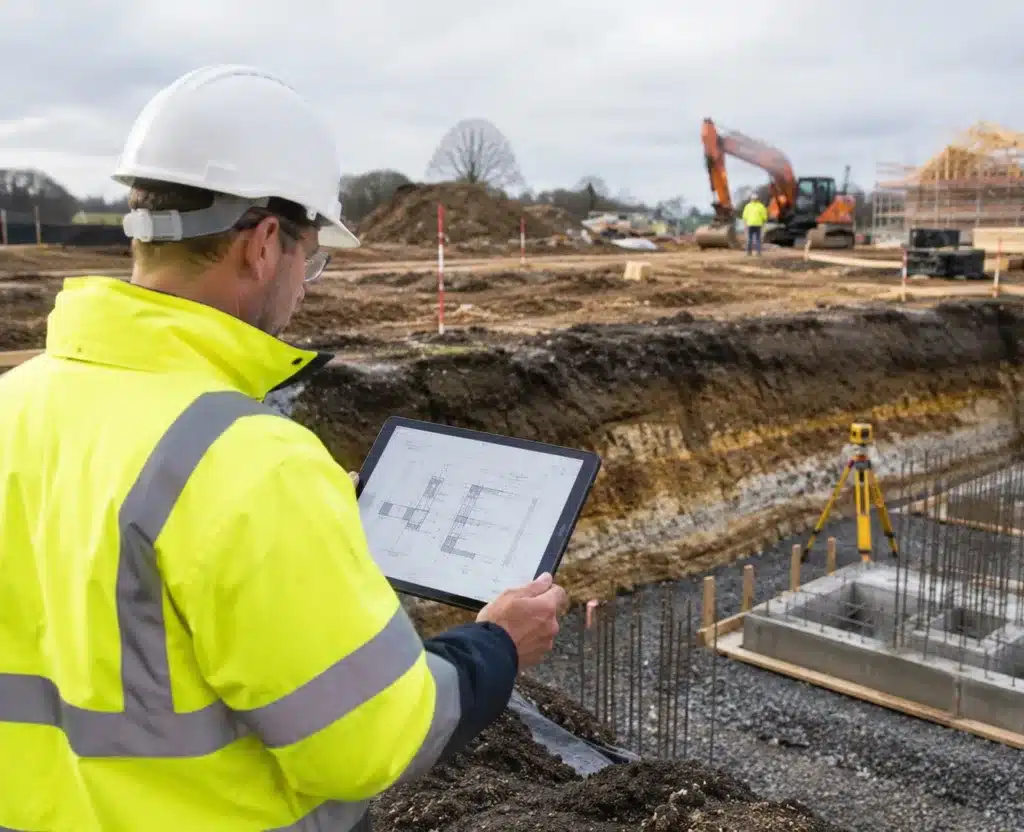
The cost of a Phase II investigation depends on the number, type, and depth of investigation points required, the analytical programme, and the complexity of the site and reporting requirements. For a small residential development requiring a modest investigation programme of five to ten trial pits and limited sampling, Phase II investigation costs can start from around £2,500 plus VAT. For larger and more complex sites requiring multiple boreholes, groundwater monitoring wells, and an extensive analytical programme, costs can be substantially higher. SES provides fixed-price quotations for Phase II investigations and will not commence fieldwork without a clear agreed scope and fee, so there are no surprise additional costs during the investigation programme.
Remediation Strategy and Validation
Where Phase II investigation confirms that contamination is present at concentrations that pose an unacceptable risk to the proposed end use, a remediation strategy must be prepared and approved by the local planning authority before development can proceed. The Remediation Method Statement (RMS) sets out the objectives of the remediation, the methodology to be used, the performance criteria that must be achieved, and the validation monitoring programme that will confirm that the objectives have been met.
SES prepares remediation strategies that are proportionate to the nature and extent of the contamination identified, commercially practical for the developer to implement, and consistent with current Environment Agency guidance and good practice. Costs for an RMS start from £900 plus VAT following completion of remediation works, SES carries out the validation sampling and testing required to confirm that the remediation objectives have been achieved, and prepares a validation report for submission to the local planning authority. Discharge of the contaminated land planning condition is conditional upon approval of the validation report, so the quality and completeness of this document is critical to the programme.
Contact Our Contaminated Land Team
To discuss your site. We respond to new enquiries promptly and can usually provide a Phase I quotation on the same day as the enquiry. Please provide the site address, the site area, the proposed development type, and any information you have about the historical use of the site, and we will advise you on the investigation approach required and provide a fixed-price quotation.
