
Contaminated Land SURVEYS, Evaluation Remediation
Contaminated Land SURVEYS Evaluation Remediation Across the UK
Contaminated Land SURVEYS Evaluation Remediation Across the UK
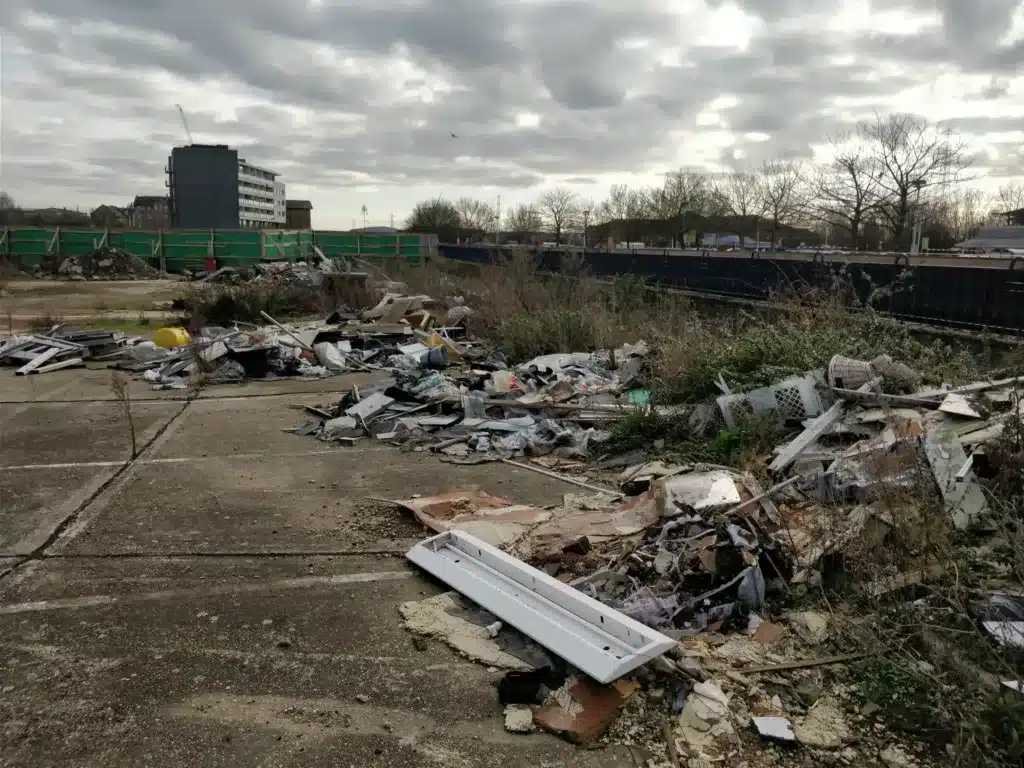
We undertake contaminated land assessments including Phase I Desk Studies (also known as Preliminary Risk Assessments), Phase II intrusive Site Investigations and design remedial solutions to resolve contaminated land issues. We provide site specific assessments to support planning applications, inform due diligence for site purchase, project feasibility and to satisfy financial or insurance institutions.
Under current UK Guidance, contaminated land is dealt with through a phased approach.
Phase I comprising desk based research and including a site visit to identify any contaminative uses that a site may have been used for. A Preliminary Risk Assessment (PRA) and initial conceptual site model are produced. In some cases, the PRA is sufficient to close out any planning conditions relating to contaminated land.
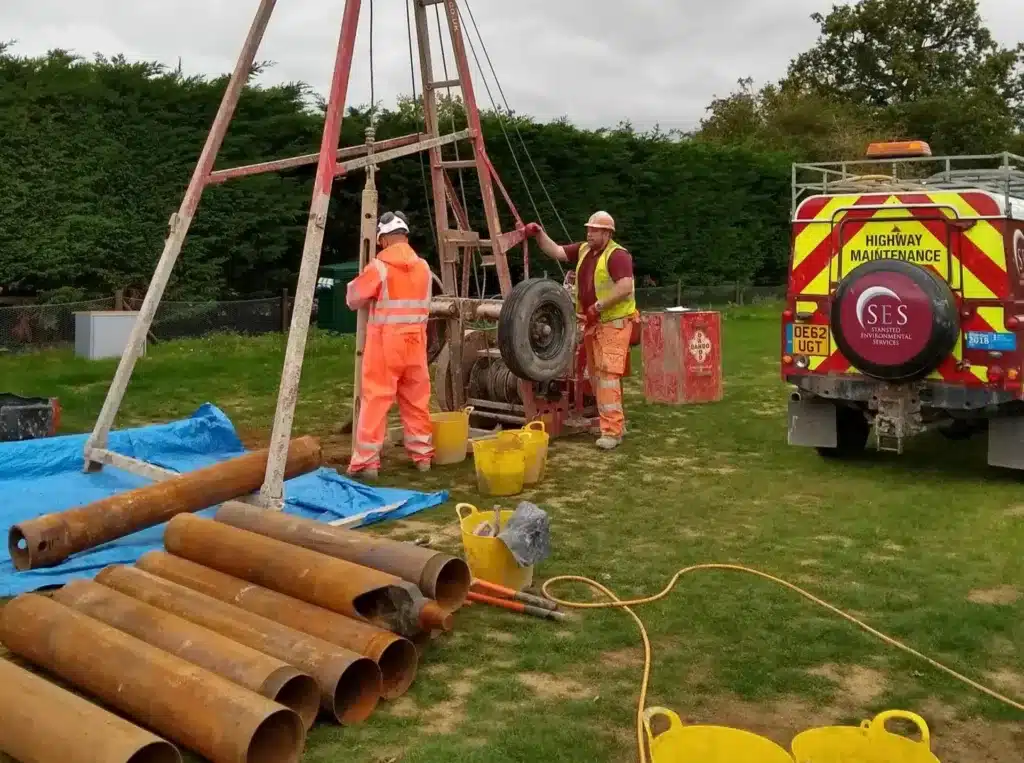
Phase II is an intrusive investigation where samples are taken from suspected areas of contamination and analysed for a range of contaminants. The sampling is based on the outcomes of the PRA. If ground gas has been raised as an issue in the PRA, then wells can also be installed and monitored over a period of time to ascertain the likelihood of gases being present. On completion of this phase of works a Generic Risk Assessment is produced detailing the levels of contamination present, if any. On more complex sites, and especially if groundwater contamination is an issue, a more complex Detailed Quantitative Risk Assessment may be necessary to identify the risks.
Phase III details the actions necessary to ensure that the site is brought to a safe condition for its intended use. This information is produced in a Remediation Method Statement.
Phase IV is the Validation Report which details any remedial works undertaken on site and provides evidence, usually through additional soil and/or water sampling, that the remediation has been successful.
Land contamination has become an important environmental issue since 1995 with the development of the contaminated land regime (set out in part 2A of the Environmental Protection Act 1990). It was introduced in England on 1st April 2000 and on 1st July 2001 in Wales, hence the need for in-depth contaminated land surveys.
Why choose US FOR CONTAMINATED LAND ASSESSMENTS?
01.
Full Compliance with Planning & Environmental Law
Our assessments are designed to meet local authority, Environment Agency, and planning requirements — ensuring your project stays compliant from desk study to remediation.
02.
In-Depth Local Knowledge
We understand the historical land uses and geological conditions across the South East, giving you accurate risk assessments tailored to your site.
03.
Clear, Phase-by-Phase Reporting
From Phase 1 Preliminary Risk Assessments to Phase 2 Site Investigations and beyond, our reports are detailed, structured, and easy for planners and stakeholders to interpret.
04.
Experienced Environmental Consultants
Our team brings extensive field experience and technical expertise, ensuring practical, cost-effective advice and remediation strategies where contamination is found.
SES Are Accredited
SES are a multi-disciplined environmental consultancy with a proven track record of providing high quality, practical and pragmatic advice to a wide range of clients across many sectors. With increasing requirements and expectations on land use change, environmental standards and pre-occupation testing and sustainability, we provide a “one-stop-shop” for all environmental services, testing and analysis requirements. SES are a multi-disciplined environmental consultancy with a proven track record of providing high quality, practical and pragmatic advice to a wide range of clients across many sectors. With increasing requirements and expectations on land use change, environmental standards and pre-occupation testing and sustainability, we provide a “one-stop-shop” for all environmental services, testing and analysis requirements.

When Is Contaminated Land Evaluation Required?
Contaminated land evaluation is typically required where there is a potential risk to human health, controlled waters, buildings or the wider environment. This most commonly arises as a planning condition following a Phase 1 Desk Study, but may also be triggered by a change of land use, historic industrial activity, fuel storage, made ground or previous remediation concerns. Local planning authorities often require a formal evaluation to confirm whether contamination is present, assess the level of risk, and determine whether remediation is necessary before development can proceed. Early evaluation helps avoid delays, unexpected costs and objections later in the planning or construction process.
How Our Contaminated Land Evaluation Process Works
Our approach is structured, proportionate and aligned with current UK guidance. We begin by reviewing existing site information, historic land use and any previous environmental reports. Where required, this is followed by intrusive investigation works, including soil, groundwater and ground gas sampling. Samples are analysed by UKAS-accredited laboratories, allowing us to assess potential risks using recognised assessment models. Findings are clearly presented, with practical recommendations that support informed decision-making and regulatory approval, rather than unnecessary over-engineering.
SES are a multi-disciplined environmental consultancy with a proven track record of providing high quality.
Identifying Risks to Human Health, Buildings and the Environment
Effective contaminated land evaluation focuses on identifying real, credible risks. We assess potential pollutant linkages between sources of contamination, pathways and receptors, including future site users, construction workers, buildings, services and nearby watercourses.
By targeting genuine risks rather than theoretical ones, we ensure that any remediation measures are appropriate, proportionate and defensible. This risk-based approach is key to satisfying planning authorities while keeping remediation costs under control.
Remediation Strategies Designed for Planning Approval
Where contamination is confirmed, we develop clear and practical remediation strategies tailored to the proposed development. This may include soil removal, capping systems, gas protection measures, groundwater management or long-term monitoring solutions.
All remediation strategies are designed to meet the requirements of local authorities, environmental regulators and warranty providers. Our focus is always on achieving compliance efficiently, without unnecessary complexity or disruption to programme timescales.
Remediation Works Management and Verification
Where required, we can oversee and manage remediation works on site, ensuring they are carried out in line with the agreed strategy. This includes validation sampling, inspection of protective measures and confirmation that remediation objectives have been achieved.
We then prepare verification reports that demonstrate compliance with planning conditions and regulatory expectations. This provides certainty for developers, contractors and stakeholders that the site is suitable for its intended use.
Supporting the Discharge of Contaminated Land Conditions
Our reports are prepared specifically to support the discharge of contaminated land planning conditions. We liaise with local authorities, consultants and project teams to address queries efficiently and provide additional clarification where required.
This proactive approach helps avoid delays at critical stages, allowing developments to progress smoothly from investigation through to completion and occupation.
Speak to a Contaminated Land Specialist
If you are dealing with a contaminated land condition or require advice on evaluation and remediation options, our team is available to help. We provide clear, practical guidance from the outset, ensuring risks are properly managed and planning requirements are met without unnecessary delay.
Instruct us in 4 easy steps
01.
Phase 1: Preliminary Risk Assessment
A desktop study is carried out, including a site walkover and review of historical records, to identify any potential contamination risks.
02.
Phase 2: Site Investigation
If required, we’ll conduct intrusive investigations such as soil, groundwater, and gas sampling to confirm the presence and extent of contamination.
03.
Risk Assessment & Remediation
We interpret the data, assess the risks to human health and the environment, and, if needed, provide a clear, cost-effective remediation plan.
04.
Validation & Reporting
Once remediation is complete, we carry out validation testing & issue a final report to demonstrate the land is safe for its use – ready for planning approval/development.
CUSTOMER TESTIMONALS
“SES provided exceptional service from start to finish. Their team was highly professional, reliable, and delivered on time. The quality of their work exceeded our expectations, and their attention to detail was impressive. We highly recommend them for any environmental project.”
