
Construction Dust Monitoring
Compliance and Health Protection for Development Projects
Construction Dust Monitoring — Compliance and Health Protection for Development Projects
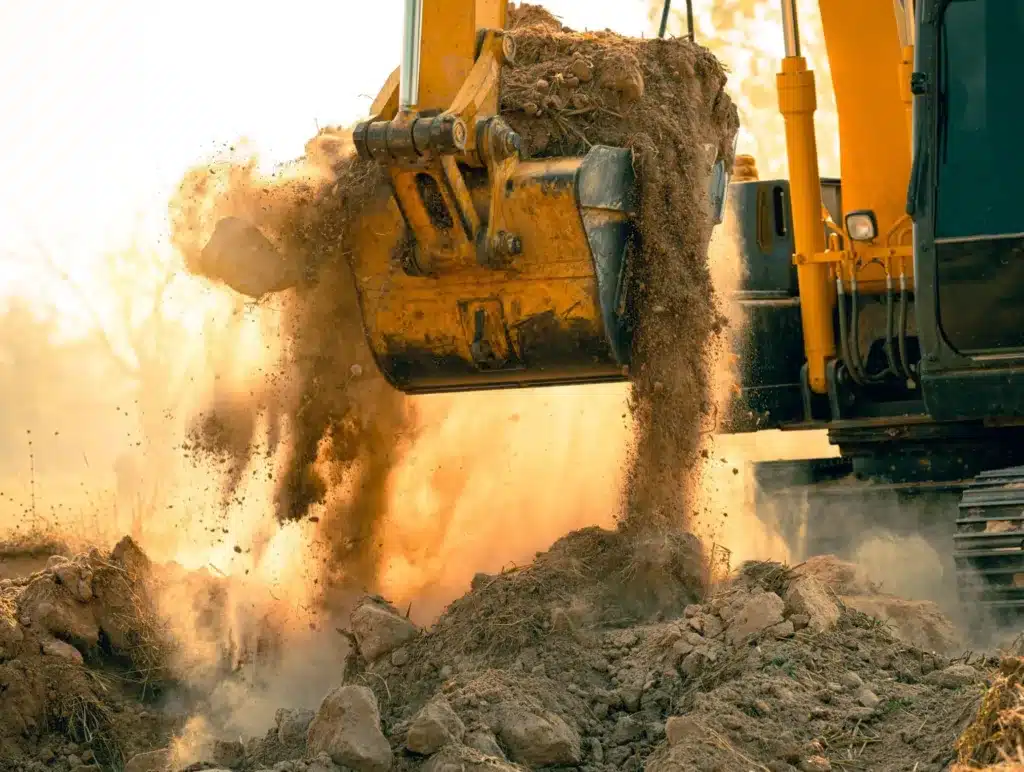
Construction dust is a significant environmental and public health concern on development sites across the United Kingdom. Earthmoving, demolition, concrete cutting, stone working, and the general disturbance of dry soils and materials can generate substantial quantities of dust and fine particulate matter that travels beyond the site boundary, affecting air quality in nearby residential areas, schools, healthcare facilities, and commercial premises. Planning conditions, Environmental Permit conditions, and the requirements of health and safety legislation all impose obligations on developers and contractors to manage and monitor dust at construction sites, and failure to do so can result in enforcement action, financial penalties, and damage to community relations.
Stansted Environmental Services Ltd provides construction dust monitoring services for demolition, earthworks, groundworks, and remediation projects across the United Kingdom. Our environmental monitoring team carries out dust monitoring, real-time PM10 and PM2.5 particulate matter monitoring, and dust risk assessments in accordance with current guidance, providing the data and reporting needed to demonstrate compliance and to identify when dust control measures need to be reinforced.

Why Is Construction Dust Monitoring Required?
Local planning authorities routinely impose conditions requiring dust management and monitoring as part of the planning consent for development projects involving significant earthmoving, demolition, or remediation. These conditions are particularly common for large residential or mixed-use developments on brownfield land, sites in proximity to sensitive receptors such as residential areas, schools, or hospitals, and remediation projects where contaminated soils are being excavated and processed. Environmental permits for waste management and remediation activities also routinely require dust monitoring as a permit condition, and the Environment Agency can take enforcement action including permit revocation against operators who fail to meet their dust management obligations.
Under the Health and Safety at Work Act 1974 and the Control of Substances Hazardous to Health Regulations 2002, employers are also required to assess and control the risk to workers from dust exposure on construction sites. Specific monitoring requirements apply where workers may be exposed to hazardous dust types such as respirable crystalline silica, asbestos fibres, or contaminated soil dusts. SES can advise on the occupational exposure monitoring requirements for your specific site and activities and can arrange for appropriate monitoring to be carried out.
Construction Dust Monitoring Methods
01.
Dust Monitoring
Monitoring of dust levels around construction, demolition, earthworks, groundworks, and remediation sites to demonstrate compliance.
02.
Real-Time PM10 and PM2.5 Monitoring
Continuous particulate monitoring using calibrated airborne particle monitors with logged data and automated exceedance alerts.
03.
Dust Risk Assessments
Assessment of dust-generating activities, sensitive receptors, and site-specific dust control requirements before works begin.
04.
Dust Management Plans
Preparation of practical dust control plans, monitoring requirements, and site inspection measures for planning, permit, and health protection compliance.
Real-Time PM10 and PM2.5 Monitoring
For sites where fine particulate matter is a concern particularly remediation projects involving contaminated soils, demolition of older structures that may contain asbestos or lead, sites adjacent to schools or healthcare facilities, or any project subject to an Environmental Permit that specifies maximum PM10 or PM2.5 concentrations. Real-time continuous monitoring of particulate matter concentrations provides a more immediate and sensitive indication of dust levels than monthly deposition gauges.
SES uses calibrated airborne particle monitors to measure PM10 and PM2.5 particulate matter concentrations at sensitive receptor locations, with data logged at one-minute intervals. The data is telemetered to a central data management system that allows SES and the client to monitor real-time dust levels remotely, with automated alerts when concentrations exceed pre-agreed action thresholds. This enables the site team to respond to elevated dust levels quickly by implementing additional suppression measures, pausing high-dust activities, or adjusting operations to take account of changing wind conditions before the situation causes a complaint or a permit exceedance.
Dust Risk Assessments and Management Plans
Before construction, demolition, or remediation works begin, it is best practice and in some cases a planning or permit requirement to prepare a dust risk assessment and management plan that identifies the dust-generating activities that will take place on site, assesses the risk they pose to sensitive receptors, and specifies the control measures that will be implemented to manage that risk. The Institute of Air Quality Management guidance for dust from construction and demolition provides a framework for this assessment, categorising sites by risk level and specifying appropriate control measures and monitoring requirements for each risk category.
SES prepares dust risk assessments and management plans that are proportionate to the scale and nature of the works, practical for site teams to implement, and likely to satisfy the requirements of local planning authorities, Environmental Permit compliance inspectors, and Health and Safety Executive inspectors. We can also carry out regular site inspections during the construction programme to verify that the measures specified in the plan are being implemented effectively and to provide documented evidence of compliance for the client’s records.
SES are a multi-disciplined environmental consultancy with a proven track record of providing high quality.
How Much Does Construction Dust Monitoring Cost?
The cost of construction dust monitoring depends on the monitoring approach required, the number of monitoring positions, the duration of the monitoring period. Real-time PM10 or PM2.5 monitoring equipment hire typically costs from around £600 per monitor per month, with data management and alerts included. Dust risk assessments, management plans and monthly reports are priced according to the complexity of the site and works. Contact SES for a project-specific quotation.
Construction Dust Monitoring Coverage
SES provides construction dust monitoring across the United Kingdom, with particular activity in London, Essex, Kent, Surrey, Hertfordshire, and the wider South East. We are familiar with the requirements of all major local planning authorities and with the Environment Agency’s approach to dust management as a permit condition. We can mobilise quickly for new monitoring instructions and can adjust monitoring programmes to reflect changes in the construction programme or in the regulatory requirements.
Arrange Construction Dust Monitoring
Please provide the site address, a description of the proposed works, the relevant planning conditions or permit conditions, and the required start date for monitoring, and we will advise on the appropriate monitoring approach and provide a quotation.
